Africa is arguably the most diverse continent in the world. It is home to nearly 2,000 languages, and French is one of the most widely spoken, along with English, Swahili, and Hausa. French is the official language in Benin, Burkina Faso, Burundi, Cameroon, the Central African Republic, Chad, Comoros, the Democratic Republic of Congo, Congo, the Côte d’Ivoire, Djibouti, Gabon, Guinea, Madagascar, Mali, Niger, Rwanda, Senegal, the Seychelles, and Togo. It is also a de facto language in countries like Mauritania and Mauritius (Library of Congress).

Interestingly, according to the IMF World Economic Outlook for 2024, 6 of the top 20 fastest-growing economies worldwide are French-speaking African nations (Niger, Senegal, Rwanda, Côte d’Ivoire, Djibouti and Benin). Although each of these countries has its own factors contributing to its economic growth:
Niger: Growth driven by investments in infrastructure and mining (especially uranium and oil).
Senegal: Economic growth supported by infrastructure projects, agricultural reforms, and a stable political climate.
Rwanda: Focus on technology, services, and good governance.
Côte d’Ivoire: Diversified economy with strong agricultural and industrial sectors.
Djibouti: Strategic location with major investments in port and logistics infrastructure.
Benin: Economic reforms, investment in infrastructure, and agricultural development.
Being French-speaking could facilitate administrative and cooperative advantages. For example, the Organisation Internationale de la Francophonie (OIF) promotes economic collaboration, the French language and peace (OIF, 2021).
However, France is scaling back its political, military and economic presence in Africa as it faces significant resentment in many nations; except for Rwanda. Its leader, Paul Kagame, encourages the country to embrace French culture, cuisine and language because he believes it is a win-win situation for both countries. On one hand, Rwanda is receiving millions of dollars for development and French companies are increasing their investments in Rwanda. On the other hand, this has garnered France a security and trade partner in Africa whilst improving France’s image with other African nations also affected by colonial and post-colonial policies (gbc1, 2024) .
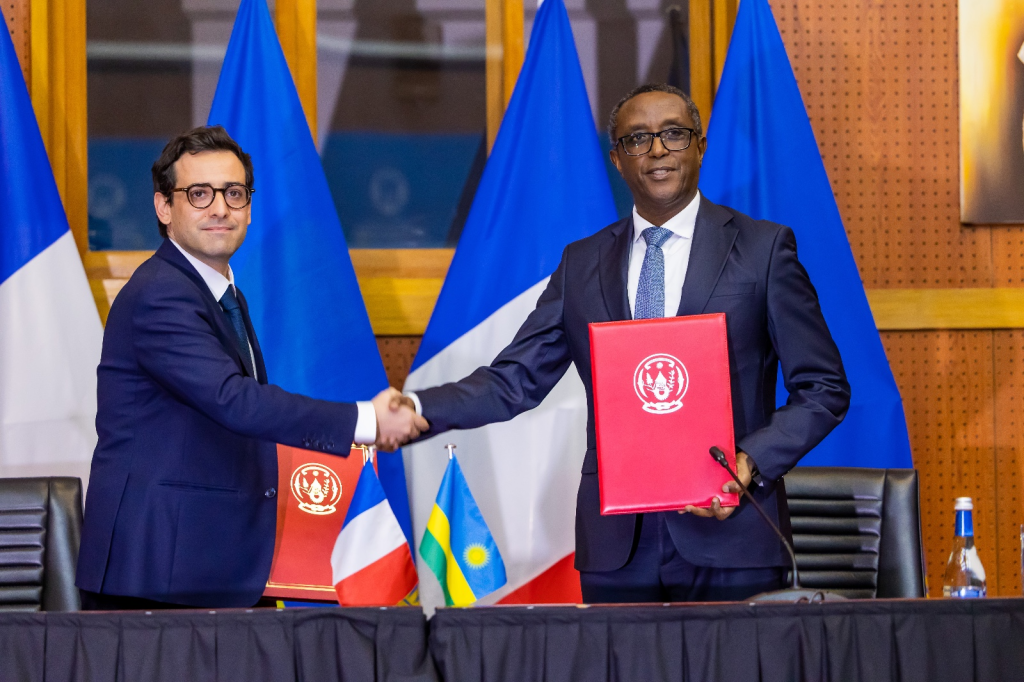
Rwanda and France also concluded a Partnership Agreement in April this year worth over 400 million euros. Despite the improving relations, Macron has yet to issue a formal apology for France failing to stop the Rwandan genocide 30 years ago. ‘France, which could have stopped the genocide with its Western and African allies, did not have the will to do so.’ President Emmanuel Macron.
Nevertheless, mending relations between France and Rwanda is crucial for France’s broader relationship with Africa. This marks a turning point for Africa’s negative viewpoints towards France; improved relations with Rwanda can enhance France’s influence and image, especially as Rwanda has been increasing its diplomatic and economic ties across the continent.
References:
Spencer, E. H. (n.d.). Research Guides: France & French Collections at the Library of Congress: Sub-Saharan Africa. Guides.loc.gov. https://guides.loc.gov/french-collections/francophone-studies/sub-saharan-africa#:~:text=French%20is%20the%20official%20language
Organisation internationale de la francophonie. (2022, November 22). Wikipedia. https://fr.wikipedia.org/wiki/Organisation_internationale_de_la_francophonie
gbc. (2024, April 7). 44th SADC Summit. Global Business Council. https://gbc1.net/index.php/2024/04/07/france-reinforces-partnership-with-rwanda-with-agreement-worth-e400m/
 Project Frafrica
Leave a comment