Researchers estimate that at least a quarter of the population in Africa has internet access. Although they are still far behind other continents when it comes to technological advancements, access to mobile devices has generated almost 2 million jobs and contributed around 10% to the total economy of Africa. Health applications have also been vital in raising the quality of life in many African countries as they supported medically vulnerable individuals and families during and before the pandemic, saving doctors’ and nurses’ time (Brookings, 2022).
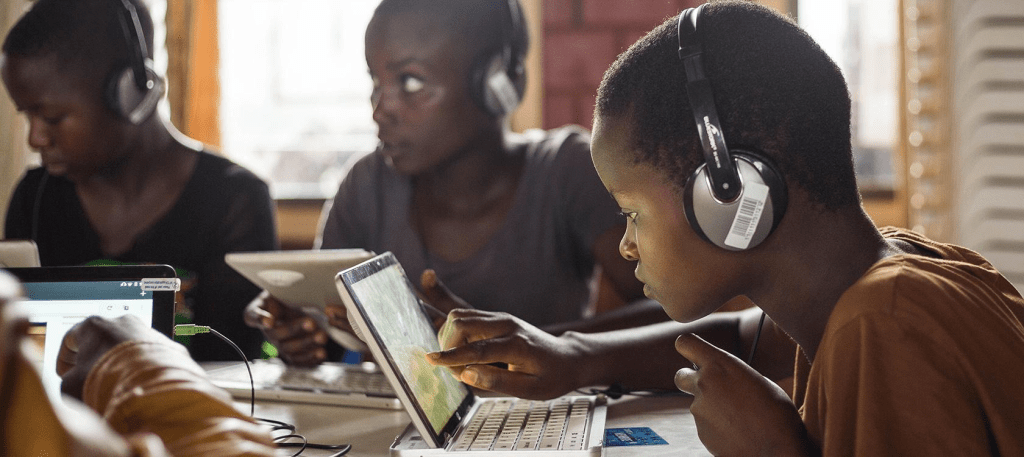
African tech startups collectively raised $1.4 billion in the first nine months of 2023, with $492,418,000 raised in Q3 alone. Kenya has been dubbed the ‘Silicon Savannah’ of Africa where the entrepreneurship ecosystem is driven in large part by high-growth technology ventures in energy and climate, health, and education (CNBCafrica, 2023).
Jit Bhattacharya, CEO and co-founder of e-mobility startup BasiGo in Kenya, says that Kenya remains a hub in Africa’s overall tech ecosystem and a preferred place to launch a technology venture in Africa.
‘Tech hubs are an excellent meeting place for startups, investors, and the supporting ecosystem that helps these technology companies get off the ground,’ he says.

However, what really propelled Africa’s economy and will continue to for the foreseeable future is African financial technology, or fintech for short. What sets African fintech apart is how forward-thinking and technology reliant it is. There are areas where there are generally very few banks and where procedures are very complicated. These new technologies make it much easier to access financial services, even in rural areas. According to the Agence Française de Développement (AFD), it’s estimated that revenue from mobile payments alone could reach $20 billion by 2025.
Africa is experiencing real dynamism but still faces a number of challenges. In particular, the harmonisation of laws and standards across the continent, which the African Union is tackling with the creation of AfCFTA (the African Continental Free Trade Area). More importantly, we must avoid techno-colonialism, where powerful international companies expand rapidly into Africa and exploit the cheaper resources available. There are a few methods to prevent this:
- Continue to invest in local startups is key to encourage innovation that is tailored to African needs.
- Establish strong data protection laws to ensure that data generated in Africa remains within the continent and is not exploited by foreign businesses.
- Promote education, particularly in STEM (Science, Technology, Engineering, and Mathematics), to build a skilled workforce capable of driving the continent’s technological growth.
- Finally, build robust digital infrastructure within Africa, such as data centers, internet exchanges, and broadband networks, to reduce reliance on foreign infrastructure.
References:
Technology adoption in Africa: current and future use cases for development | The TechTank Podcast. (n.d.). Brookings. https://www.brookings.edu/articles/technology-adoption-in-africa-current-and-future-use-cases-for-development-the-techtank-podcast/#:~:text=Researchers%20have%20estimated%20that%20at
The Rise Of African Tech Hubs: How They Are Becoming The Silicon Valleys Of The Continent. (2023, November 2). http://Www.cnbcafrica.com. https://www.cnbcafrica.com/2023/the-rise-of-african-tech-hubs-how-they-are-becoming-the-silicon-valleys-of-the-continent/
“More tech companies are developing in Africa than in the rest of the world.” (n.d.). http://Www.afd.fr. https://www.afd.fr/en/actualites/more-tech-companies-are-developing-africa-rest-world
Nyandeje, G. (2023, July 16). The term techno-colonialism is not a recent concept and has been discussed by many early players in the African internet ecosystem since the early 90s. Techno-colonialism refers to the domination of technology and knowledge systems by external entities, resulting in the exploitation and subjugation. Linkedin.com. https://www.linkedin.com/pulse/techno-colonialism-why-africa-must-develop-home-grown-nyandeje/
 Project Frafrica
Leave a comment