The buzzword of the 21th century: ‘AI’, with increasingly more companies bragging how their new device, software or service will use Artificial Intelligence to benefit its customers. However, on a more wider scale, AI has the power to change entire countries, and yet it also widens the gap between first world nations already surrounded by cloud-based technologies and developing countries that cannot afford the drastic increase in power consumption or the implementation of nation-wide servers and framework to support such demands.

On the other hand, AI has led many experts to believe that it has huge development opportunities in Africa if the right infrastructure and policies were put in place. Research has shown that AI could contribute up to 15 trillion dollars by 2030, 1.2 trillion of which could be generated in Africa (UN African Renewal, 2024).
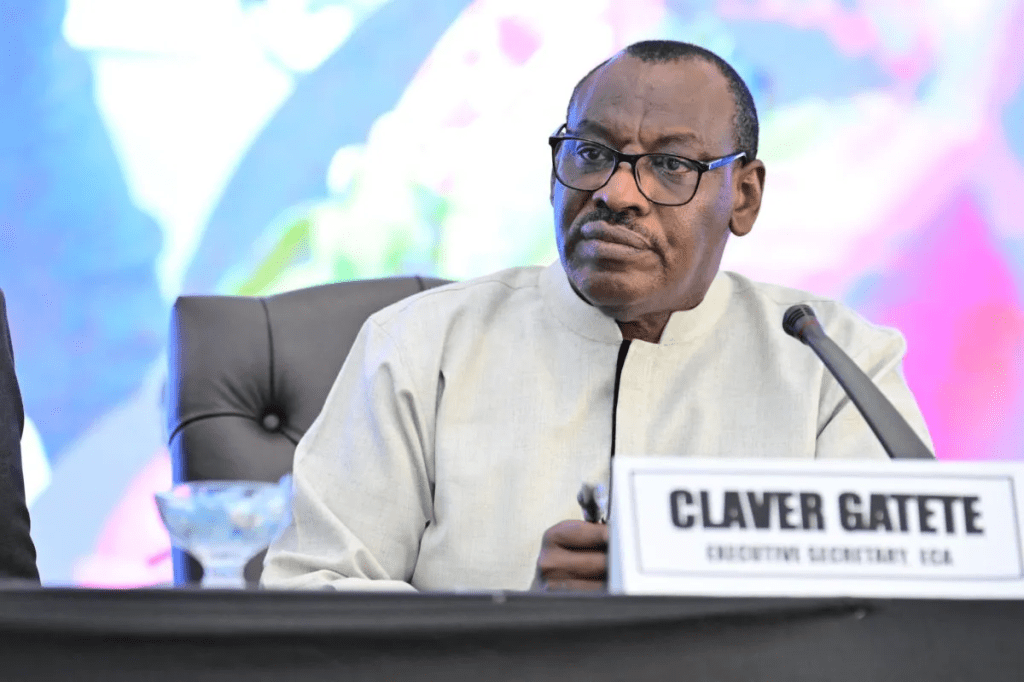
According to the UNECA Executive Secretary, Claver Gatete, the biggest challenge is the lack of stable and affordable internet connectivity across the continent. He said, during a panel discussion on ‘Fostering prosperity through policies on artificial intelligence in Africa’, that ‘Out of the 1.6 billion people who are not connected, Africa really is one of the biggest places where we are not connected. If you are not connected you cannot even talk about AI. We need infrastructure, we need energy investment going hand in hand with the IT infrastructure.’
Currently, Africa’s fastest supercomputer, Lengau, is struggling to run at full capacity because of unreliable power (Science Advisor, 2024). Despite the average per capita electricity consumption in Africa being among the lowest in the world, ranging from 150-300 kWh per year in many countries, compared to the global average of about 3,100 kWh, nearly half of the Sub-Saharan population lacks access to electricity, around 600 million people.
The African Development Bank Group estimates that to achieve universal energy access, it will require providing at least 160 gigawatts of new capacity, 130 million new on-grid connections, 75 million new off-grid connections and providing 150 million households with access to clean cooking solutions. To achieve these goals it is estimated that the investment needed will range between US $60 billion and US $90 billion per year.

Seeing this map, it is clear that most of central Africa has particularly limited access to electricity, much less Artificial Intelligence.
Although we are constantly promised the power of AI, I believe it will be a while until the entire continent of Africa can successfully implement it since much of the region still lacks access to basic electricity. However, with the rapid progress of startups in Africa, there is a good chance that many of the developed regions such as South Africa will be pioneers in AI.
References:
Artificial intelligence and Africa. (2024, March 7). Africa Renewal. https://www.un.org/africarenewal/magazine/march-2024/artificial-intelligence-and-africa
Mutiso, R. M. (2024). AI in Africa: Basics Over Buzz. Science, 383(6690). https://doi.org/10.1126/science.ado8276
 Project Frafrica
Leave a comment